An exploration of multiculturalism's evolution
16 June 2023
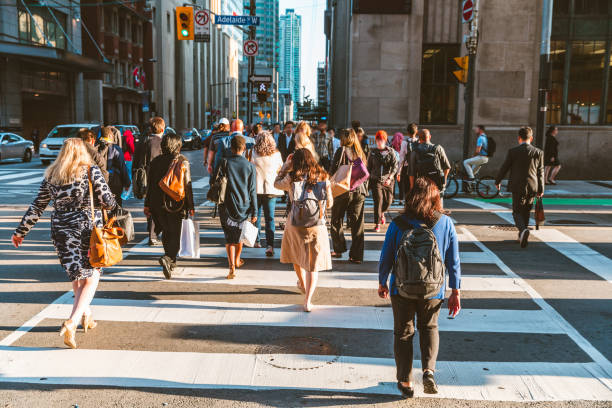
Multiculturalism refers to the coexistence of several ethnic, racial, religious, and linguistic groups. Differences in social origins, religious connections, nationalities, and economic considerations exist in every culture (Prasanna, 2021). These characteristics are what distinguish a culture.
Over time, the definition of multiculturalism has evolved, and an exploration of multiculturalism's evolution helps us understand these changes. It was initially used to explain how multiple cultures coexist within a civilization. Today, it is also used to characterize government programmes that promote ethnic and socioeconomic diversity (Prasanna, 2021). Fowers and Richardson (1996) define multiculturalism as the social-intellectual movement that advocates diversity as a basic concept and demands that all groups of people be treated with dignity and equality. Furthermore, Wright (2015) describes multiculturalism as the status of a society or the globe in which multiple ethnic and cultural groups are perceived to be politically significant, and secondly, as a programme or policy supporting such a society.
The movement of multiculturalism evolved from a determination to confront economic and social inequality, as well as frequently systemic racism. Ethnic politics became a tool for political freedom. Apart from the growing assertiveness of minority groups, multicultural politics was bolstered by the surge in worldwide migration following World War II, which resulted in enhanced cultural variety in many societies. (studysmarter.us, no date). Over the years, how multiculturalism impacts society has become a widely discussed and controversial topic.
On the one hand, some claim that multiculturalism is the only way for people to live harmoniously with each other. It also promotes optimism between communities, allowing individuals from diverse backgrounds to live and work together (Prasanna, 2021). Multiculturalism directly connects to identity, as culture influences personal, political, and social identity. In modern Britain, multiculturalism shares certain characteristics with nationalism by emphasizing the importance of culture as a foundation for social and political identity (studysmarter.us, no date).
On the other hand, critics argue that multiculturalism results in an inflow of individuals, creating a more regimented and separated society (Prasanna, 2021). One such critic, former British Prime Minister David Cameron, highlighted concerns about multiculturalism in modern Britain in one of his speeches:
Under the doctoring of state multiculturalism, we have encouraged different cultures to live separate lives apart from each other and apart from the mainstream. We failed to provide a vision of society in which they feel they want to belong. We've even tolerated these segregated communities behaving in ways that run completely counter to our values.David Cameron, Former British Prime Minister (EURACTIV, 2011)
Prasanna (2021) similarly identifies the "divide-and-conquer" phenomenon as a key issue in how multiculturalism impacts society. This phenomenon divides individuals based on ethnic origin, with little consideration for equality among all ethnicities. Instead of fostering a cohesive community, it separates individuals into discrete groups.
This raises the question: is multiculturalism dividing Britain and, more broadly, the world? To address this, we must examine multiculturalism in modern Britain. London, often considered the heart of multiculturalism, exemplifies this concept. In 2011, it was estimated that 37% of London's inhabitants were born overseas, and less than 60% of the population was white (Freytag, n.d.). Immigration has accelerated cultural diversity in London, with food markets vividly showcasing this phenomenon. Vendors and buyers in London's markets reflect a blend of cultures, creating spaces that feel reminiscent of global markets (Watson, 2009).
London, as stated above and illustrated in the video, is renowned as a multicultural megacity with one of the most ethnically diversified populations in the world today. In 2011, it was projected that 37% of London's inhabitants were born overseas, and less than 60% of the population was white (Freytag, n.d.). This clearly showcases how multiculturalism impacts society, with the continuous acceleration of immigration in London. When immigration increases, so does the existence of more cultures. Food markets, for example, capture the essence of London's diversity. Over the years, the ethnic mix of both vendors and buyers at these markets has evolved significantly as global migration has brought large numbers of migrants into inner-city areas (Watson, 2009). The variety of items available in several London markets today might give the impression of shopping in a market in India, Pakistan, Africa, or Asia, with stalls full of fruits, vegetables, and spices barely seen two decades ago.
However, as immigration accelerated, some "British" white citizens became unsettled or moved out of London. This raises the question of how multiculturalism in modern Britain interacts with the concept of national identity. The BBC (2012) asked people in the UK what it means to be British, and the responses varied widely.
One person stated:
"To be British means to respect our country and to respect how British things are done."
Another person stated:
"I believe being British is showing pride, respect and being proud of living in the UK. It also means showing knowledge and respect for the royal family and drinking a lot of tea!"
A third person stated:
"I think that being British means that you are proud of the country you live in. It does not matter if you weren't born there or your family aren't from there."
These perspectives reflect how multiculturalism in modern Britain remains intertwined with evolving notions of identity. London has undoubtedly experienced a cultural transformation, particularly in its outer boroughs. Some white British citizens may have moved because their neighborhoods have changed, with traditional tea rooms and restaurants replaced by takeout chicken stores and halal supermarkets catering to newer arrivals. However, there is also a broader story here about white working-class families who moved from the slums and bombed-out East End in the twentieth century, embraced new economic opportunities, and eventually purchased homes in rural or coastal areas (Easton, 2013).
Ultimately, multiculturalism is a controversial topic in the UK and around the world. However, I firmly believe that its benefits outweigh its drawbacks. While I recognize my bias as an immigrant living in the UK, I ground my perspective in data. Between 2001 and 2011, European immigrants who entered the UK after 2000 contributed more than £20 billion to public budgets (UCL, 2014). Additionally, they provided the nation with functioning human capital worth £6.8 billion in education investment, which the UK government would have otherwise needed to fund.
It is clear that multiculturalism is beneficial to the UK and the world as long as it is implemented fairly, fostering peaceful coexistence and mutual benefit among all cultures. Achieving this will require dedicated effort and time from both the UK government and society at large.
References
BBC Newsround (2012) What does being British mean?. Available at: https://www.bbc.co.uk/newsround/18211612 (Accessed: 16 May 2022).
Easton, M. (2013). Why have the white British left London? BBC News. [online] 20 Feb. Available at: https://www.bbc.co.uk/news/uk-21511904.
EURACTIV (2011). Cameron: State multiculturalism has failed. YouTube. Available at: https://www.youtube.com/watch?v=z3xsnEzA8Fw.
Fowers, B.J. and Richardson, F.C. (1996). Why is multiculturalism good? American Psychologist, 51(6), pp.609-621. doi:10.1037/0003-066x.51.6.609.
Freytag, F. (n.d.) 'Multicultural London: convivial or divided? A literary exploration' Available at: https://www.gbz.hu-berlin.de/downloads/pdf/londonposter_gbz.pdf
Prasanna (2021). Multiculturalism Essay | Multiculturalism and Its Influence and Benefits on Society. [online] Available at: https://www.aplustopper.com/multiculturalism-essay/.
studysmarter.us. (n.d.). Multiculturalism: Definition, Theories & Impacts | StudySmarter. [online] Available at: https://www.studysmarter.us/explanations/politics/political-ideology/multiculturalism/.
UCL (2014). Positive economic impact of UK immigration from the European Union: new evidence. [online] UCL News. Available at: https://www.ucl.ac.uk/news/2014/nov/positive-economic-impact-uk-immigration-european-union-new-evidence.
Watson, S. (2009). Brief Encounters of an Unpredictable Kind: Everyday Multiculturalism in Two London Street Markets. Everyday Multiculturalism, pp.125-139. doi:10.1057/9780230244474_7.
Wright, J.D. (2015). International encyclopedia of the social & behavioural sciences. 2nd ed. Amsterdam: Elsevier.